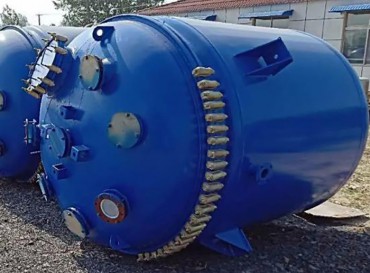
Glass lined reactor are core equipment in industries such as chemical and pharmaceutical,and their corrosion resistance and smooth surface are key to ensuring product quality.Incorrect cleaning and disinfection methods are one of the main reasons for damage to the porcelain layer and shortened equipment lifespan.Mastering scientific and standardized cleaning and disinfection methods is not only necessary to ensure product purity,but also an important investment in the equipment itself.
1.Core principles of cleaning and disinfection
Before starting any operation,it is important to remember the following three principles:
Priority should be given to protecting the porcelain layer:all behaviors that may cause mechanical impact or thermal stress to the enamel reactor should be avoided.It is strictly prohibited to use hard objects such as metal shovels and steel wire balls.
The golden rule of cleaning:"Clean in a timely manner".After the reaction is complete,clean the residue in the kettle immediately before it has completely solidified and adhered,which can achieve twice the result with half the effort.
Safety is the bottom line:all operations must be carried out after cutting off power,hanging warning signs,releasing the pressure inside the kettle,and fully cooling/lowering the temperature,and personal protection must be taken.
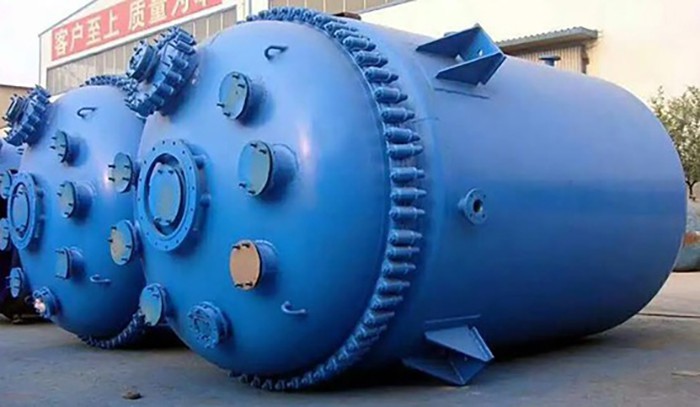
2.Conventional cleaning methods
According to the nature of the pollutants,different cleaning methods can be selected.
1.Physical cleaning method
Applicable situation:For residues that are not firmly attached or as a preliminary cleaning.
Method:
Soft cloth brushing:Use a nylon brush,soft plastic brush,or a cloth that is not easy to shed fluff,dipped in water or neutral detergent for brushing.
High pressure water gun flushing:For large reaction vessels,use low-pressure to medium pressure water guns for flushing.Attention:The water pressure should not be too high,and the nozzle should not directly impact the kettle wall and components.A certain angle and distance should be maintained.
Sponge ball cleaning:Using a circulating pump,a specially designed sponge ball is pushed inside the kettle and the inner wall of the pipeline for cleaning,suitable for systems with long pipelines.
2.Chemical cleaning method
Applicable situation:For firmly adhered chemical dirt,polymers,coking materials,etc.
Method:
Choose cleaning agent:
Alkaline cleaning agent:It has a good effect on removing grease and organic residue.
Acidic cleaning agent:effective in removing metal oxides and inorganic salt deposits.
Operation points:
Concentration and temperature:Strictly follow the low concentration of the cleaning agent and control the temperature(usually not exceeding 60°C)to avoid excessive reaction and damage to the ceramic layer.
Circulating cleaning:The cleaning solution is pumped into the reaction vessel for circulation,or stirred at low speed by a stirrer to ensure uniform cleaning.
Long term soaking is strictly prohibited,especially for strong acids and alkalis.The cleaning time should not be too long.After completion,it must be rinsed repeatedly with clean water until neutral.
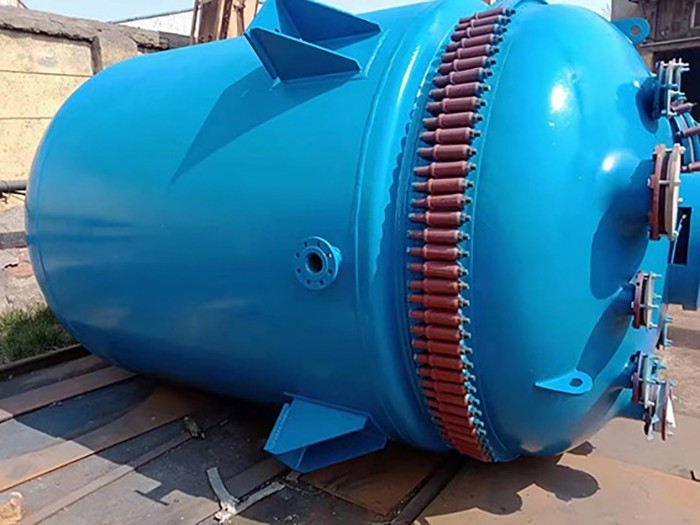
3.Disinfection and sterilization methods
For occasions with sterile requirements,disinfection or sterilization should be carried out after cleaning.
1.Chemical disinfection method
Common disinfectants:75%ethanol,hydrogen peroxide,chlorine containing disinfectants,peracetic acid,etc.
Operation process:
Wet all surfaces of the inner wall with disinfectant solution,or ensure complete contact through circulation.
Maintain contact for a certain period of time.
Rinse with sterile water or injection water to remove all disinfectant residues.
2.Physical sterilization method
Hot water sterilization:Introduce pure steam or high-temperature hot water to maintain the internal temperature of the equipment above 121°C for more than 30 minutes.This is a commonly used and reliable method.Attention:The heating and cooling process must be smooth to avoid rapid cooling and heating that may cause the ceramic layer to"explode".
Steam sterilization(online/offline):Pure steam is introduced into the reaction vessel or jacket for high-temperature sterilization under pressure.It is also necessary to strictly control the rate of temperature rise and fall.
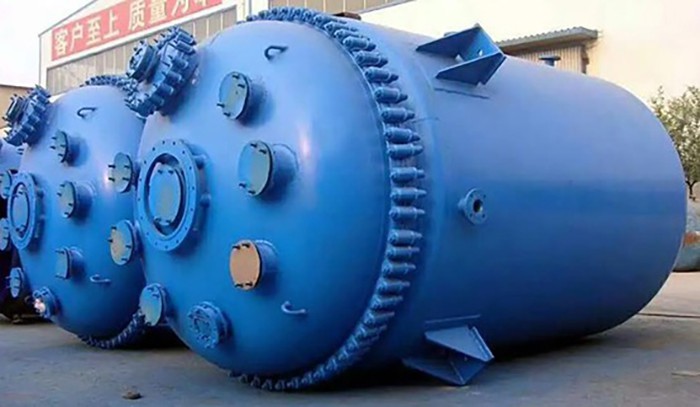
4.Special case handling and precautions
Scaling/hard attachments:You can try soaking and softening with a suitable solvent first,and then performing chemical or physical cleaning.Do not strike!
Cleaning after Ceramic Layer Damage:Once the ceramic layer is found to be damaged or peeled off,the area will quickly be contaminated by rust generated by the corrosion of the metal substrate.Professional repairs should be carried out as soon as possible after cleaning,otherwise the damaged area will quickly expand.
Mixing system and sight glass:When cleaning,it is necessary to clean the mixing blade,thermometer sleeve,and sight Glass lined reactor at the same time,as these parts are prone to dirt and grime accumulation.When cleaning the mirror,use a soft cloth to prevent scratches.
Record and confirmation:After each cleaning and disinfection,the method,reagents,time,and operator used should be recorded.And confirm the cleaning/disinfection effect through the pH value,conductivity,or microbial indicators of the final rinse water.
Cleaning and disinfecting Glass lined reactor like a simple part of daily maintenance,but it is actually a crucial lesson in ensuring production safety,product quality,and equipment lifespan.Adhering to the concept of"prevention first,gentle operation,scientific selection",we are dedicated to guarding this fragile"Glass lined reactor",which will surely repay you with long-term,stable,and reliable operation.
 Address:Zibo City, Shandong Province
 WhatsApp:+8615653328535
 Wechat: +8615965331535
  E-mail:zs@sdsmachinery.com