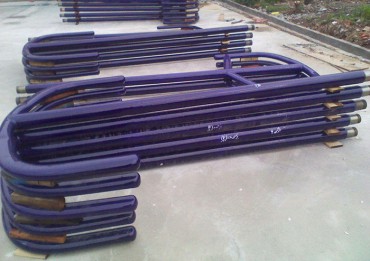
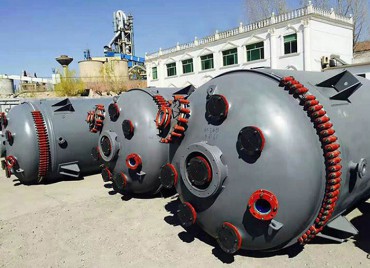
In the fields of nuclear energy,chemical engineering,or special material synthesis,the design of MSGL reactors often faces a core problem:how to break through size limitations and achieve larger scale reactor construction?The size of a reactor is not only related to energy output or production efficiency,but also involves a series of engineering challenges such as material strength,thermal management,and safety control.
1、Technical positioning of MSGL reactor:integration of modularity and special operating conditions
Although there is no clear academic definition for"MSGL",considering the development trend of reactors,it can be assumed that it has the following characteristics:
Modular design:achieve scale expansion through standardized unit combinations,reducing single volume limitations;
Special reaction media,such as supercritical fluids,plasmas,or strong radiation fields,require special materials and structural support;
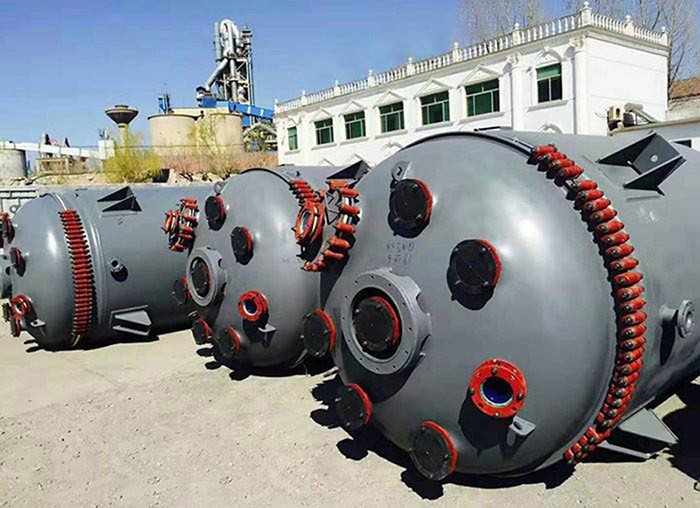
High energy density:Pursuing higher reaction efficiency per unit volume and demanding size optimization.
The upper limit of the size of such reactors requires finding a balance between reaction efficiency,structural safety,and economy.
2、Benchmark case of existing reactor size:leap from laboratory to industrial grade
1.Nuclear energy field:Dimensional evolution of pressurized water reactors
Taking commercial nuclear power plants as an example,the core component of pressurized water reactors-the reactor pressure vessel-can have a diameter of 4-5 meters and a height of over 10 meters,and can accommodate hundreds of fuel rods inside.Its size is limited by:
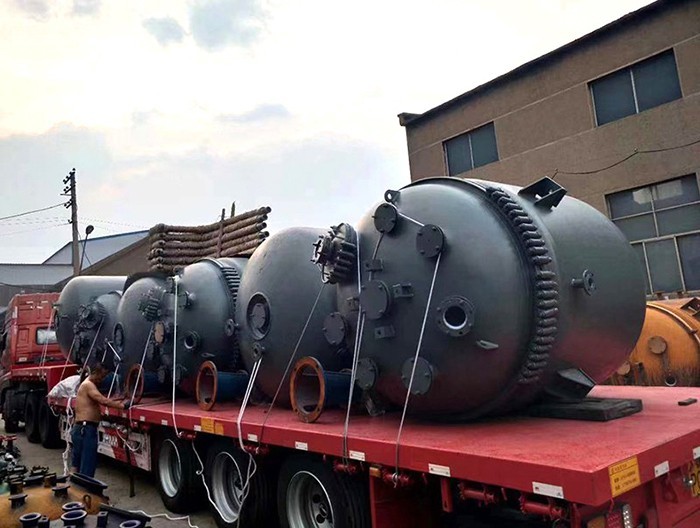
Material strength:RPV needs to withstand pressures of 15-20MPa and high temperatures above 300℃,with thick walled casting technology being the key;
Neutron moderator:Excessive size may lead to increased neutron leakage,and the distribution of moderator needs to be optimized;
Transportation restrictions:Oversized components need to be manufactured in sections and assembled on-site,which increases costs and construction time.
2.Chemical industry:Breakthrough in supercritical water oxidation reactor
In the supercritical water oxidation technology for treating high concentration organic waste,the reactor needs to withstand a pressure of 25MPa and a high temperature of over 500℃.The SCWO reactor at a certain factory in Germany has a diameter of 2.8 meters and a height of 15 meters,and its size is limited by:
Corrosion control:The corrosion rate of metals by supercritical water is 1000 times that of room temperature,and titanium alloy or ceramic lining is required;
Mixing efficiency:It is difficult to uniformly mix reactants at large sizes,and special nozzles and turbulent structures need to be designed.
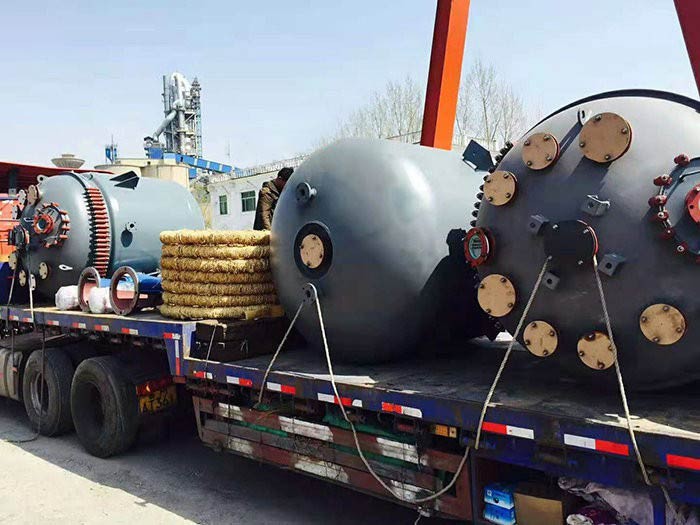
3.Assumption Case:Modular Expansion of MSGL Reactor
If the MSGL reactor adopts a modular design,its theoretical size can be achieved through"unit stacking".For example,a single module with a diameter of 2 meters and a height of 5 meters can be combined with a 10×10 array to form a super large reactor with a diameter of 20 meters and a height of 5 meters.But it needs to be addressed:
Inter module sealing:risk of interface leakage under high pressure/high temperature;
Fluid distribution:Ensure uniform flow of the reaction medium within a large system;
Control synchronization:real-time monitoring and collaborative operation of thousands of modules.
The exploration of size reactors in MSGL reactors is essentially a human pursuit of energy density and material conversion efficiency.However,the expansion of size is not endless and requires a balance between technical feasibility,economic cost,and environmental impact.With the integration of new materials,intelligent manufacturing,and digital technology,the design of reactors will focus more on"functional integration"rather than simply"size gigantization"-for example,by optimizing reaction pathways to increase unit volume production capacity or using renewable energy to drive low-carbon operation.
 Address:Zibo City, Shandong Province
 WhatsApp:+8615653328535
 Wechat: +8615965331535
  E-mail:zs@sdsmachinery.com